

The best vegetables to grow in your Maine garden are tomatoes, bush peas, bush beans, summer squash, potatoes, onions, radishes, and greens like lettuce. The best seasons to grow vegetables are from spring to fall.
Are you planning to set up a vegetable patch in your Maine backyard? Do you have trouble deciding which vegetables to grow?
Then this article could come in handy!
Contents
8 Best Vegetables to Grow in Maine
Maine experiences warm (temperate), slightly humid summers and long, chilly, and extremely snowy winters.
It has all four distinct seasons (and a period of time after winter that Mainers locally call the mud season.
The soil types in Maine range greatly from sandy to clayey, with numerous combinations in between.
The selected vegetable variety must be compatible with the local soil and environment.
Given below are the eight best vegetables you can grow.
1. Tomatoes
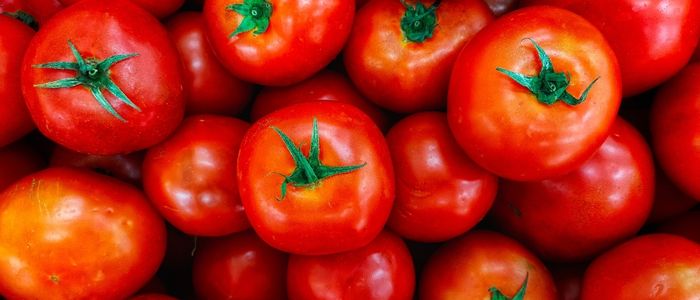
Tomato (Solanum lycopersicum), a very popular garden vegetable, is the 1st one on our list.
Native to South America, tomato berries come in a number of varieties, especially when grown in organic gardens.
Why Grow Tomatoes?
Even though Maine might lack the long growing season tomato requires, you can compensate for it by starting them indoors around the 14th of April and later transplanting them.
Many varieties will thrive in Maine’s climate.
These are versatile, easy-to-grow plants that are remarkably productive, even if you have a small garden.
Tomatoes can be grown in pots, window boxes, raised beds, vertical gardens, etc.
Maintenance and Care
Mulching (preferably with black plastic mulch) can really help the plant fight diseases as well as retain adequate warmth.
The plants can be staked or caged to survive winds and support their growing weight as they develop.
Overfertilization can cause cat facing, bloom drop, and some fruit abnormalities.
Common concerns include blossom end rot, leaf blight diseases, mites, aphids, fruit worms, and hornworms.
Here is a guide to growing tomatoes:
2. Bush Peas
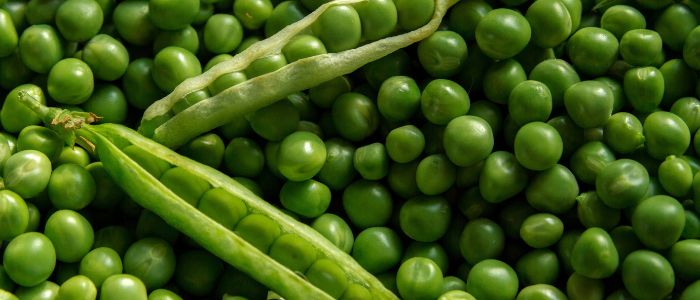
Peas (Pisum sativum) is a pulse that requires no introduction. Bush pea is one of its varieties that is famous among gardeners.
The plants have a lifespan of one year.
Why Grow Bush Peas?
Peas are one of the first vegetables that can be planted in Maine in the spring since they grow well in cold soils.
Most Maine gardeners start planting on Patriots’ Day.
They are easy to grow, do not require support like vining peas, and can be planted densely to save space. Bush peas are great for small gardens and patio gardens.
They are compact and offer good yields of crisp peas. Picking often increases yield. Moreover, peas enrich soil through nitrogen fixation.
Maintenance and Care
Peas should be watered frequently but lightly. Don’t use too much nitrogen fertilizer, as this will promote foliage growth rather than pea pod growth.
Some common concerns include root rots, mildew, aphids, and pea weevils.
Here is a guide to growing peas:
3. Bush Beans

Beans (Phaseolus vulgaris) and especially bush beans (a variety of snap beans) are another group of pulses that are popular in home gardens. This annual warm-season plant is native to Peru.
Why Grow Bush Beans?
It is suited to grow in Maine gardens when planted in late spring when the soil is relatively warmer.
Like bush peas, bush beans are easy to plant and grow, are compact, can be planted densely, and are perfect for small garden spaces.
They tend to be more pest resistant than pole beans and other varieties.
They require little water, are drought-resistant, can be harvested multiple times, and enrich the soil through nitrogen fixation.
Maintenance and Care
They prefer slightly acidic, well-drained soil and 6 to 8 hours of direct sunlight per day. They are vulnerable to soil salts.
Their shallow root structure necessitates careful weeding, maintenance, and watering during dry seasons.
Bacterial blight and bean leaf beetle are some of the common concerns.
Here is a guide to growing beans:
4. Summer Squash

Summer squash (Cucurbita pepo subsp. pepo), are annual plants that sprout on short, compact vines and are harvested when they are juvenile and their rinds are still tender.
Squash is considered a superfood and can be harvested in around 60 days.
Why Grow Summer Squash?
Late May to early July climate in Maine is perfect for growing summer squash.
As the name of the plant suggests, summer or early summer is the finest time to plant it.
It is relatively easy to grow summer squash and some various varieties and hybrids are well suited to growing in Maine that may be cultivated in a variety of soil conditions.
Maintenance and Care
Squashes have a short root system that necessitates caution during cultivation. Mulch the soil to help it retain adequate heat.
Weed eradication becomes difficult once the plants grow bushy.
Insects that attack these plants include aphids, cutworms, leaf miners, melon flies, and white flies.
Other common issues include damping-off, powdery mildew, and mosaic viruses.
Here is a guide to growing zucchini and bush squash:
5. Potato
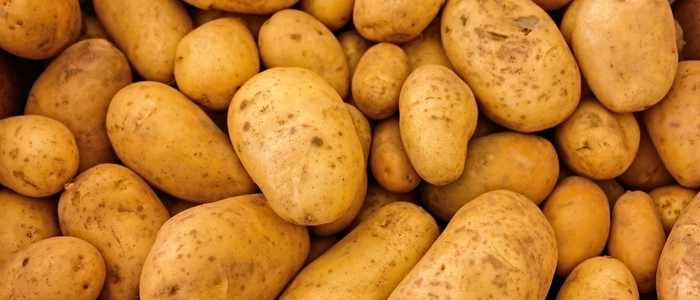
Potato (Solanum tuberosum) is a root vegetable in the nightshade family grown for its starchy edible tubers.
The potato, which is a native of the Peruvian-Bolivian Andes, is a major food crop as well as a much-liked garden vegetable.
Why Grow Potatoes?
Maine and these tubers have a long history together. Potatoes have historically been a popular crop in household gardens, owing to their ability to be stored for use during the long Maine winter.
Maine’s mid-spring to early-summer environment is great for planting potatoes, and growing them requires minimal effort and care.
Additionally, these tubers are packed with nutrients.
They require little space to grow and can even be grown in containers and boxes.
Maintenance and Care
They require neutral, fertile, well-drained soil for the best results but will grow in many types of soil.
Manure is not recommended for fertilization.
They benefit from greater levels of phosphorus and potassium, which drive tuber growth (in contrast to nitrogen, which promotes vegetative growth).
Common concerns include late blight, early blight, Colorado potato beetles, and aphids.
Here is a guide to growing potatoes:
6. Onion

Onions (Allium cepa) are herbaceous biennial plants popular as root vegetables. Native to Central Asia, this amaryllis family member is grown for its edible bulbs.
Why Grow Onion?
Summer in Maine, when days are long, is an ideal time for growing long-day onion varieties. Onions in general are easy to grow.
Most varieties can be planted early in the spring, and you can get your harvest from the middle of the summer to the end of the fall.
Onions are a cold-tolerant vegetables that can withstand mild frosts. Numerous long-day and intermediate-day types are low-cost, resistant to foliar diseases, and have good storage qualities.
Maintenance and Care
The best conditions for growing onions are full sun and sufficient drainage. Although they need a lot of water, onions shouldn’t ever have damp soil.
Nitrogen fertilizer should be applied every other week after the onions are planted.
Some common concerns include bulb and neck rots, smut and thrips.
Here is a guide to growing Onions:
7. Radish

Radishes (Raphanus sativus) are a group of root vegetables known for their spicy, crispy, and zesty nature. Native to China, they have a lifespan of 2 years.
Why Grow Radish?
Radish is a cool-weather vegetable well suited to grow in Maine. It can be grown in early spring or as a fall vegetable and is among the first vegetables to be harvested.
They are fast-growing and can be harvested in three weeks after planting.
Moreover, they require little care and do not require much space to grow.
Maintenance and Care
Regular and consistent watering in a fertile, loose and well-drained soil gives best results.
Excessive nitrogen fertilization leads to lush tops with small radishes.
Flea beetles and root maggots are some of the common concerns.
A guide to growing radishes:
8. Lettuce

Lettuce (Lactuca sativa) is commonly grown for its leaves but also cultivated for its seeds and stem.
It originated in the Mediterranean region and has an average lifespan of 65-130 days from planting to harvesting.
Why Grow Lettuce?
It is a cold-season plant that thrives in Maine’s cool spring and fall conditions.
It is even capable of surviving amid snow or frost.
It is incredibly simple to cultivate, grows quickly, can be planted in any soil, and requires minimal maintenance.
Furthermore, It takes up little space and produces for a long time.
Maintenance and Care
Lettuce has shallow roots and a spindly root structure which might require you to exercise caution.
It is critical to fertilize and water these plants regularly. Soil that is moist but not damp and has sufficient drainage is essential.
Tip-burn; aphids are some common concerns.
Here is a guide to growing lettuce:
What is the easiest-growing vegetable in Maine?
Beans and peas, followed by tomatoes, radishes, carrots, onion and lettuce are some of the easiest vegetables to grow in Maine.
What is the best time to grow vegetables in Maine?
Spring, summer and fall are Maine’s best seasons to grow vegetables. The growing season thus extends from around March to October.
FAQ
As soon as the soil is frost-free, spinach, lettuce, peas, beets, carrots, Swiss chard, and radishes can be directly sown into the garden.
In Maine, starting tomatoes, chard, and kale in mid- to late-March is ideal.
Maine is known for its potato crop.
Maine on average has approximately 155 days between the last and first frost.
Quick Recap: Top Vegetables to Grow In Maine
| Vegetable | Why grow? |
|---|---|
| Tomato | 1. Require less space 2. Remarkably productive |
| Bush Peas | 1. Easy to grow, cold hardy 2. Nitrogen-fixing |
| Bush beans | 1. Easy to grow, less space 2. Nitrogen-fixing |
| Summer squash | 1. Easy to grow 2. Many varieties |
| Potato | 1. Little maintenance, little space 2. Good storage |
| Onion | 1. Inexpensive 2. Hardy vegetable |
| Radish | 1. Fast growth, harvest in 3 weeks 2. Requires less space |
| Lettuce | 1. Cold hardy 2. Easy to grow |
Bottomline
I hope that this article has been helpful in your search for vegetables to grow in Maine.
Do share this article with your kith and kin who are interested in growing vegetables in Maine.
https://en.wikipedia.org/wiki/Tomato
https://www.britannica.com/plant/tomato
https://www.britannica.com/plant/pea
https://en.wikipedia.org/wiki/Pea
https://en.wikipedia.org/wiki/Bean
https://www.britannica.com/plant/bean
https://simple.wikipedia.org/wiki/Squash_(plant)
https://www.britannica.com/plant/squash
https://en.wikipedia.org/wiki/Potato
https://www.britannica.com/plant/potato
https://en.wikipedia.org/wiki/Onion
https://www.britannica.com/plant/onion-plant
https://en.wikipedia.org/wiki/Radish
https://www.britannica.com/plant/radish
https://en.wikipedia.org/wiki/Lettuce
https://www.britannica.com/plant/lettuce